The tech I'm most psyched to see this year is anything but traditional PC silicon, and certainly isn
Published: January 01, 0001

This week I have been mostly: Playing around with one of the most ridiculous handhelds... which I still can't help but like, and losing myself gazing lovingly at the Razer Blade 16's glorious OLED screen.
I'm a PC gamer, a tech obsessive, and probably a bit of a contrarian, too. Which is maybe why I'm always keen to support the underdog story when it comes to a new player entering the PC gaming u31 game เข้าสู่ระบบ arena. I mean, it may be a billion dollar underdog, but when it comes to proper Windows PC silicon, Qualcomm is still a n00b, and I can't wait to see how its new laptop CPUs finally shape up.
There are a few different reasons why Qualcomm's new chips are the slices of silicon I'm most interested in getting my hands on this year. Mostly, it's because we're talking about a complete departure from the x86 domination of Intel and AMD over the PC processing space from a Windows perspective. And there's a lot of inherent potential in that, especially having seen what Apple did with its own chips when it sloughed off its Intel chip obligations.
But there is also a creeping negativity around what the so-called 'big three' are up to this year when it comes to hardware releases in PC gaming land. Sure, Nvidia could start to ship its RTX 50-series this year, but even should we end up with the most powerful graphics card ever, it will only be at the hyper-expensive end of the market. That's only going to leave PC gamers with either empty bank accounts or a deep crushing sense of envy.
AMD could be shipping new this year, too, but they're reportedly going to be chasing the mid-range and are unlikely to be meaningfully changing it as a price category. Only if it can genuinely, drastically change the performance we expect from that tier of GPU will the Radeon RX 8000-series have our collective attention.
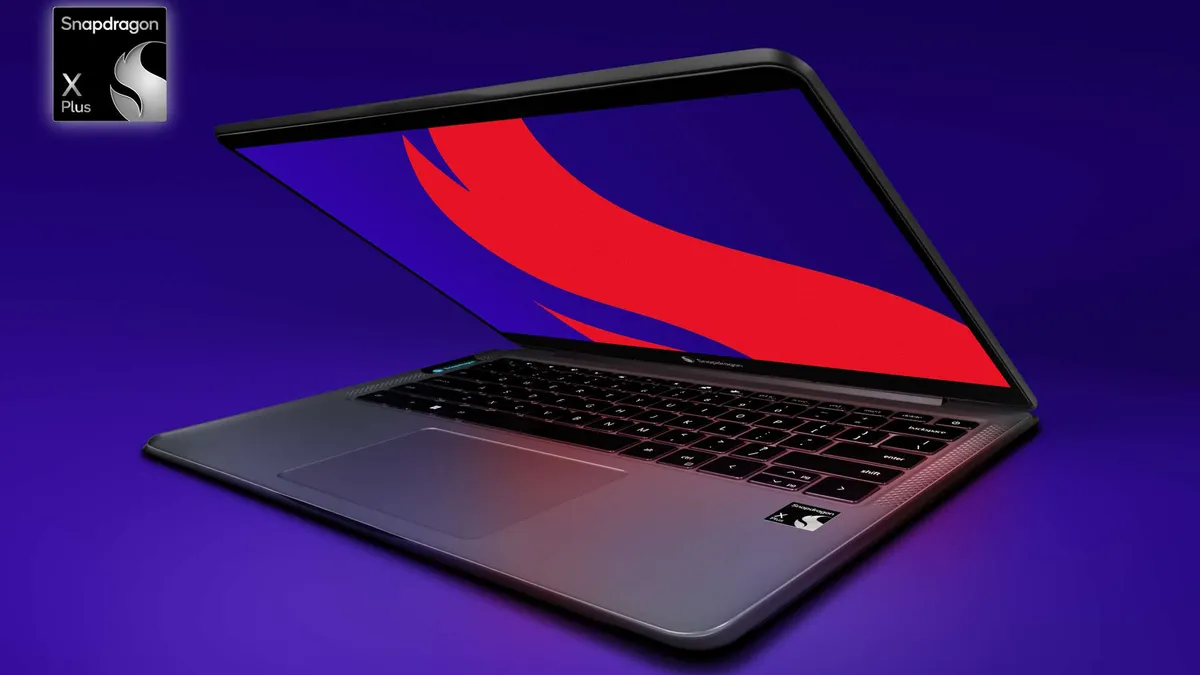
Then there's the potential for and Intel Arrow and Lunar Lake CPUs, but who cares about boring ol' x86 silicon when Qualcomm's new Snapdragon X Elite (and X Plus) chips are going to give us the low power, slimline laptops of our dreams?
This is the promise of the new ARM-based processors, using either 12 or 10 Qualcomm Oryon CPU cores, with an Adreno GPU capable of up to 4.6 TFLOPs of compute power inside them, the chips can can scale from completely fanless 12 W machines to 80 W configs. And they are supposedly super-efficient, delivering either the same performance as AMD's 780M for way less power or higher performance in the same envelope.
| Platform | Snapdragon X Elite | Snapdragon X Elite | Snapdragon X Elite | Snapdragon X Plus |
|---|---|---|---|---|
| Part number | X1E-84-100 | X1E-80-100 | X1E-78-100 | X1P-64-100 |
| Cores | 12 | 12 | 12 | 10 |
| Total cache | 42 MB | 42 MB | 42 MB | 42 MB |
| Max multi-core frequency | 3.8 GHz | 3.4 GHz | 3.4 GHz | 3.4GHz |
| Dual Core Boost | 4.2 GHz | 4.0 GHz | N/A | N/A |
| GPU TFLOPs | 4.6 | 3.8 | 3.8 | 3.8 |
| NPU TOPS | 45 | 45 | 45 | 45 |
| Storage | NVMe PCIe 4.0 | NVMe PCIe 4.0 | NVMe PCIe 4.0 | NVMe PCIe 4.0 |
| Memory | LPDDR5x | LPDDR5x | LPDDR5x | LPDDR5x |
| Transfer u31 เครดิตฟรี 188 rate | 8448 MT/s | 8448 MT/s | 8448 MT/s | 8448 MT/s |
| Release date | Mid-2024 | Mid-2024 | Mid-2024 | Mid-2024 |
And this isn't just going to be for boring office apps either, because Qualcomm has—needlessly, in my opinion—been talking up its gaming performance in the Windows world. Remember, we're talking about an ARM-based chip, running an operating system where most of the software is designed for an x86 instruction set and we're told that games will "just work."
I'm sure it's not as simple as that, and I am absolutely expecting times where the performance is slammed to an unplayable point simply because the drivers and game code are absolutely not making friends with one another. But, if Valve's Proton has taught me anything, it's that sometimes things that intuitively shouldn't actually will "just work."
So yes, I am absolutely pumped about the potential for a sleek 13-inch laptop, with an all-day battery life, and the processing and gaming performance that will cater for all my reasonable laptop requests. If I can get the same frame rates as something like the iGPUs inside the latest handhelds and AMD's top laptop chips, but with twice the battery life, then I am going to be a happy man.
But I am old enough and ugly enough to know that we can't have nice things. I've been burned often enough that I know there's a good chance the X Elite chips will be an absolute mess for anyone wanting to actually game on those machines. The silicon itself may well be fantastic, but Intel will tell you that it's one thing to have effective hardware and another thing entirely to make sure you're able to regularly squeeze that performance out across the rainbow spectrum of PC gaming good-times.
Just look at the patchy performance of Intel's Arc GPUs—even after a ton of patches—across a broad cross-section of PC games. Sometimes the frame rates are fantastic, but also there are times where the performance just isn't there… or the game just flat doesn't work.
So, I do still have a hard time trusting that Qualcomm is going to be able to nail both the drivers for its new hardware as well as manage the translation layers which allow it to run native x86 code on its 64-bit ARM cores. Especially when we have in its apparently unreplicable Snapdragon X Elite benchmarks.
It's true, Qualcomm hasn't been particularly detailed about either the tech or the benchmarks with the press so far, and Charlie is calling BS on a lot of those presented numbers having spoken to OEMs working with the silicon, which is rather concerning.
One, because it sucks the promised performance may well not be there in the final reckoning, and two, because why the hell has Qualcomm dug itself such a hole if the claims aren't true? At no point did anyone expect these ARM PC laptop chips to be targeting real PC gaming performance, so the company had no reason to start u31 เข้าสู่ระบบ making claims it knows not to be true which can only harm its rep post release.
Until we actually get hands on laptops sporting the Snapdragon silicon it's not possible for us to tell whether Charlie's mistaken, or if Qualcomm is actually pulling numbers out of the air, but it has dampened my enthusiasm a touch, that's for sure.

The only other piece of tech I want to see asap—and most especially want to see actually being good—is graphics architecture. But after the Alchemist launch debacle I am more than a little reticent about getting too excited by Intel's upcoming GPUs. More than anything it's about whether Intel can launch on time this year, but also whether it's learned the lessons from Alchemist and can actually release a genuinely competitive suite of discrete graphics cards to give us a proper GPU third way.
Which I guess is one of the reasons I want Qualcomm to succeed. Maybe it's part of my contrarian tendencies, where I want fresh new upstart alternatives in different sectors of PC gaming. Intel in graphics cards to upset the Nvidia (and to a much lesser extent) AMD hegemony, and Qualcomm in processors to disrupt the x86 monopoly.
And if not Qualcomm, then… who? Because with the potential for ARM-based chips running Windows' x86 apps the market is suddenly wide open, and we know Nvidia has some history with Arm. Surely a ShieldBook is still a possibility?
Recommended Reading
The Diablo 4 Secret of the Spring quest is one that you can run into while out exploring the snowy plains [[link]] and gloomy forests of the Fractured Peaks, but it's tricky to overcome without a little help. ...
The elusive Oathbound chests in Fortnite are found in hidden locations with their coveted loot inside. Aside from getting the upper hand in a [[link]] battle royale skirmish, these chests are crucial interacta...
After 20 years at Microsoft, much of it spent as the public face of Xbox consoles, Larry Hryb, better known to gamers around the world as Major [[link]] Nelson, is leaving the company and moving on to other th...
Comments (3)
I really enjoy playing the slot games here. The variety is amazing, from classic reels to modern video slots with interactive bonus rounds. Every spin feels like an adventure, and the graphics and sound effects are top-notch, making the experience immersive and exciting. I love the overall aesthetic of the platform. The animations, visual effects, and sound design make the gaming experience more dynamic and immersive. It's one of the reasons I keep coming back. The progressive jackpots are thrilling, and it's exciting to watch the jackpot amounts grow as more players spin the reels. I hope they add even more jackpot slots because it adds a lot of excitement to the gameplay.
I love the overall aesthetic of the platform. The animations, visual effects, and sound design make the gaming experience more dynamic and immersive. It's one of the reasons I keep coming back. The variety of games is excellent, including table games like blackjack, roulette, and baccarat, in addition to slots. This keeps the platform interesting and allows me to switch games depending on my mood. Customer support has been outstanding whenever I had any issues. They respond quickly and professionally, ensuring that any concerns with deposits, withdrawals, or gameplay are addressed immediately, which makes me trust the platform more.
Sometimes I wish there were more ways to earn rewards through loyalty programs or frequent player bonuses. Adding seasonal events or special challenges could enhance the excitement even further. The mobile interface is smooth and intuitive. I can play all my favorite slots on the go without experiencing any lag or glitches. The design is responsive and user-friendly, which makes gaming on my phone just as enjoyable as on my computer.